…unwantedly
It started like digital time travel. After five or six years off Facebook, I found myself logging back in, not out of nostalgia but because work required it. I opened a new account, thinking I could keep things clean and separate, but platforms have long memories. Or maybe they are memory. Before long, Meta had stitched everything back together, collapsing the distance I thought I had created. Suddenly I was not starting fresh. I was stepping into an archive of myself.
There were old birthday messages, familiar names, small fragments of a life I had not revisited in years. People I had lost touch with resurfaced in quiet, almost accidental ways. I reached out to a few of them and they responded with a kind of warmth that I enjoyed. For a moment, it reminded me why these platforms ever worked at all.
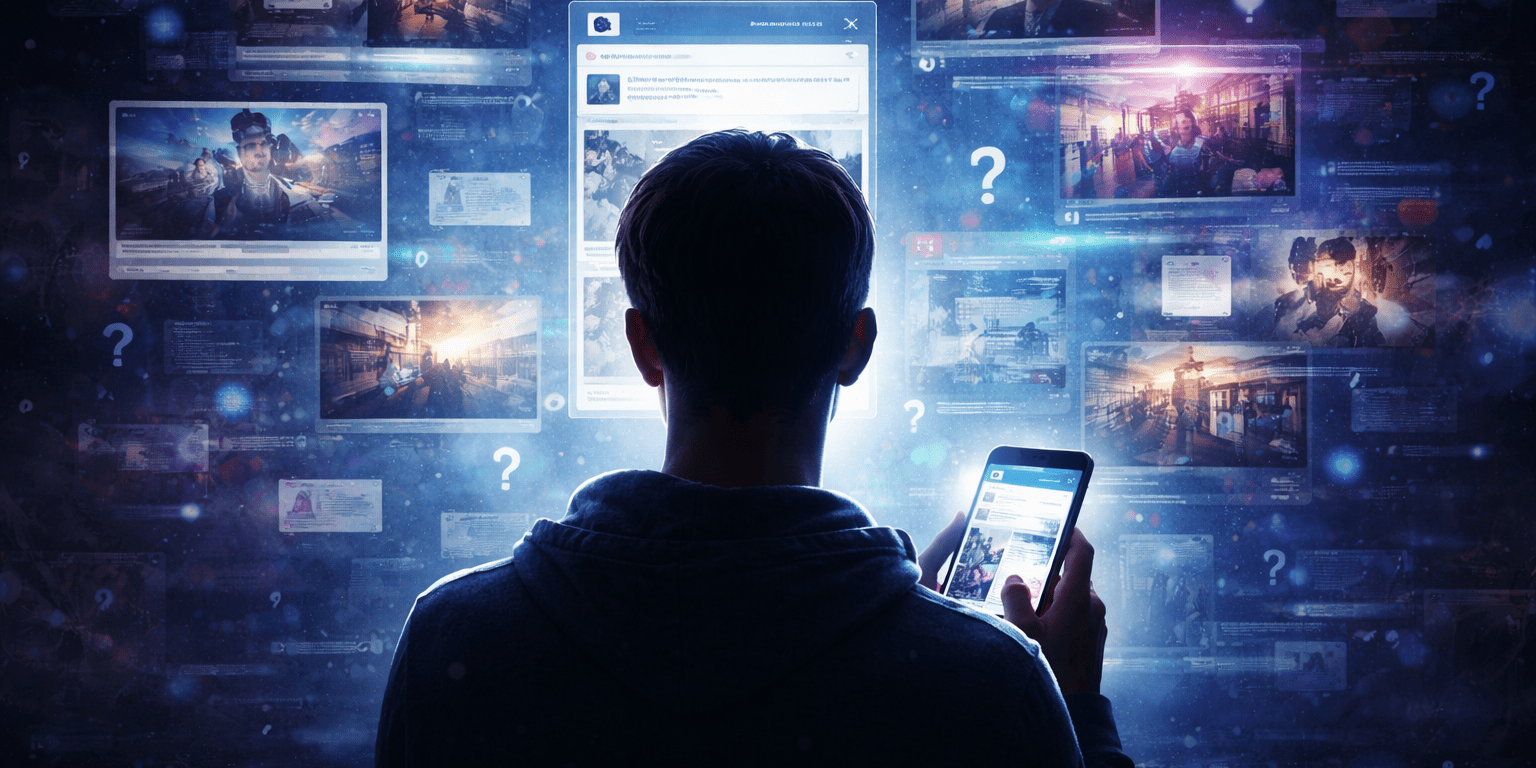
But that feeling did not last very long. The feed itself made sure of that. Not the people, but everything surrounding them. The scroll felt off in a way that was hard to articulate at first, like something slightly misaligned. It was not obviously wrong, just persistently strange. A stream of content that looked like information but did not feel like it carried any weight. Posts about movies that could have been real announcements or entirely fabricated. Pages that imitated authority without ever earning it. Content that seemed optimized to circulate, not to inform.
It would be easy to dismiss this as the general state of social media, but the comparison is unavoidable. I have been using Instagram this whole time, and despite sharing the same corporate logic, it does not trigger the same reaction. Instagram feels more legible, even when it is superficial. Facebook feels flattened, as if everything exists at the same level of credibility, whether it is real, promotional, synthetic, or entirely made up. Once that flattening becomes visible, it changes the way you read everything.
The shift is not just about misinformation. That problem is familiar by now. What feels different is the effort required to make sense of anything. The question is no longer whether something is true. The question is whether it is even real in the first place. That distinction matters because it changes the way you engage. Over time, the constant need to evaluate authenticity becomes tiring. You hesitate, then disengage, and eventually you stop investing attention altogether. It is not exactly cynicism. It is closer to fatigue. A system where belief requires too much work starts to lose its hold.
This is where a thought from Nicholas Thompson keeps coming back. In a landscape saturated with synthetic content, the importance of sources becomes almost absolute. Not just what is being said, but who is saying it and why that should matter. These are questions that used to belong to journalism, but they now sit at the center of everyday scrolling. When the boundaries between human and machine, reporting and generation, signal and noise begin to blur, the responsibility shifts quietly onto the user. Most people never agreed to carry that responsibility, yet it is there in every swipe.
And still, Facebook offers something that is difficult to replace. It reconnects you with people. It surfaces pieces of your past that you did not realize you missed. It creates moments of continuity that feel real in a way the rest of the feed does not. That is what makes the experience so conflicted. The human layer remains valuable, even as the informational layer becomes harder to trust.
So the tension sits there unresolved. You stay because of the people, but you question everything else around them. It no longer feels like returning to a place. It feels like entering a system where familiarity and doubt coexist in the same space. Maybe this is what platforms inevitably become over time, environments that require a certain level of skepticism to navigate. Or maybe this is something new, a phase where the infrastructure of information itself is shifting faster than our ability to process it.
Either way, the experience leaves behind a lingering question that is difficult to ignore. What exactly are we supposed to believe here anymore?
 Telepatico